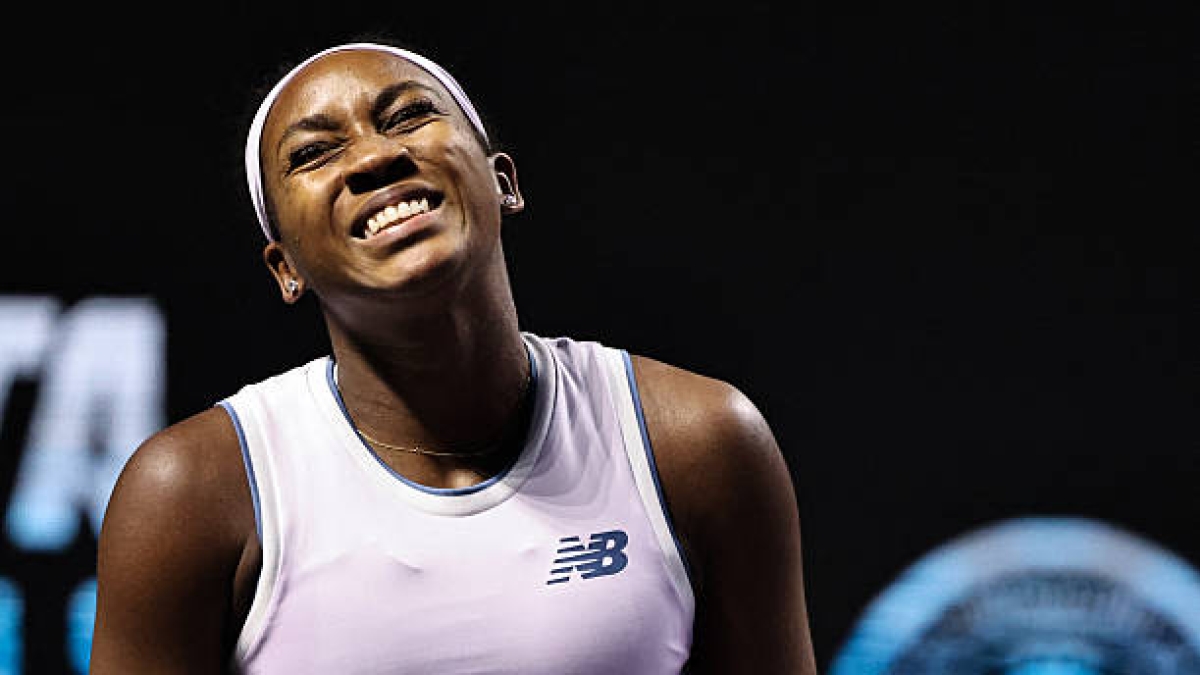
Coco Gauff’s Next Frontier? Why a Former Wimbledon Semifinalist Thinks the Serve Holds the Key
Coco Gauff’s rise has been anything but ordinary. From the moment a fearless 16-year-old stunned Venus Williams on Centre Court at Wimbledon, it was clear American tennis had found its next superstar. Fast-forward a few seasons, and Gauff has done far more than live up to the hype; she’s a US Open champion, a Roland Garros winner in 2025, and a fixture near the very top of the WTA rankings.
Yet even at world No. 3, the sense remains that Gauff’s ceiling is still higher. And according to former Wimbledon semifinalist Alexandra Stevenson, one specific part of her game may determine whether she can consistently go toe-to-toe with the sport’s current standard-bearers: Iga Świątek and Aryna Sabalenka.
A Champion Still in Progress
For all her achievements, Gauff has never pretended to be a finished product. Her growth has been steady, deliberate, and public. She’s already proven she can beat both Świątek and Sabalenka on big stages, but doing it week after week across surfaces and conditions is a different challenge entirely.
That’s where refinement comes in. In today’s WTA landscape, where margins are razor-thin at the top, small technical weaknesses can be ruthlessly exposed. For Gauff, the spotlight has often fallen on one area: her serve.
The Numbers Behind the Concern
The statistics paint a clear picture. Gauff ended the 2025 season with the highest double-fault count on the WTA Tour, committing 431 across the year. One particularly tough outing in Montreal saw her leak 23 double faults in a single match, a staggering figure for a player of her stature.
Recognizing the issue, Gauff made a proactive move by bringing in biomechanics specialist Gavin MacMillan, the same expert who previously helped Aryna Sabalenka stabilize her own serve. The impact was noticeable. Gauff’s double-fault numbers began to trend downward, and although the US Open didn’t deliver another title, her Asian swing was a success, highlighted by a strong championship run in Wuhan.
Progress, yes, but according to Stevenson, not the end of the conversation.
Alexandra Stevenson’s Technical Verdict
Speaking on the Inside-In Tennis Podcast, Stevenson offered a candid assessment of Gauff’s development. While praising her athleticism, the former Wimbledon semifinalist suggested there are deeper technical elements still to address.
Stevenson believes movement and mechanics remain intertwined with Gauff’s serving struggles. In her view, adjustments made in practice should translate more quickly to competition, especially in an area as fundamental as the serve. She also questioned the order in which Gauff’s team prioritized changes, suggesting that the serve should have been tackled before fine-tuning the forehand.
Her broader point was simple but pointed: when a player’s serve falters, it can have a domino effect on the rest of the game, particularly the forehand. Confidence erodes, timing suffers, and pressure compounds.
A Bigger Issue Across the WTA
Stevenson didn’t stop with Gauff. In fact, she framed the discussion as part of a larger trend in women’s tennis. According to her, serving is often under-emphasized on the WTA Tour, a neglect that can be costly at the elite level.
She pointed to Elena Rybakina as the clearest example of what a dominant serve can achieve. Rybakina’s powerful, reliable delivery helped her storm through the field and defeat the world’s top eight players at the WTA Finals, underscoring how decisive that one shot can be.
For Stevenson, the lesson is obvious: in an era defined by baseline power and physicality, the serve remains the great separator.
What This Means for Coco Gauff
The encouraging part for Gauff fans is that none of this feels insurmountable. She’s already shown a willingness to adapt, invest in expert help, and confront weaknesses head-on. At just 21, she has time on her side and a résumé most players would envy by the end of their careers.
If the serve continues to evolve into a true weapon rather than a liability, Gauff’s game could reach an entirely new level. And in a WTA era ruled by Świątek’s precision and Sabalenka’s firepower, that upgrade might be exactly what tilts the balance.
Final Take: The Last Piece of the Puzzle?
Coco Gauff is already a Grand Slam champion and one of the faces of modern tennis. But greatness in this sport is rarely static. As Alexandra Stevenson suggests, the difference between being a contender and becoming a consistent dominator may come down to mastering the most fundamental shot in tennis.
If Gauff’s serve catches up with the rest of her world-class game, the WTA hierarchy may soon face a familiar and formidable American force at the very top.
