Sabalenka Enters the Debate: World No. 1 Voices Concerns Over Transgender Participation in Women’s Tennis
A candid moment away from the baseline
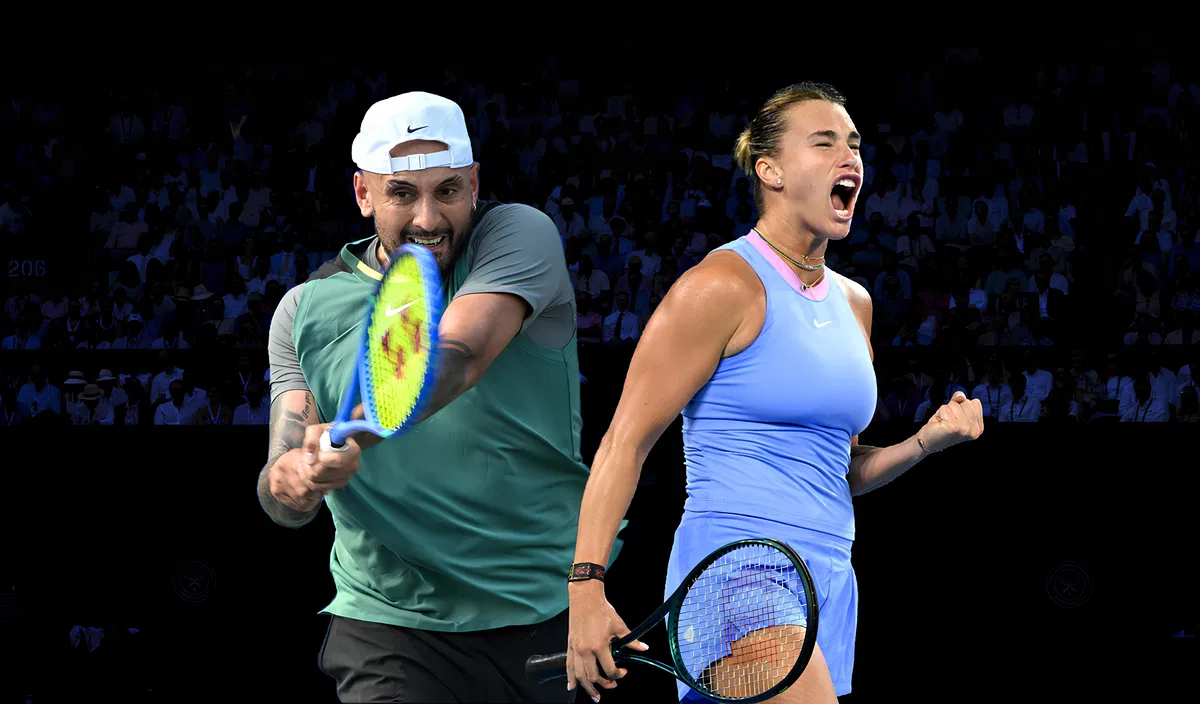
Aryna Sabalenka is known for her thunderous groundstrokes, unapologetic intensity, and straight-talking nature. But this week, the world No. 1 found herself at the center of a conversation far removed from forehands and finals appearances. During a high-profile appearance on Piers Morgan Uncensored alongside fellow Grand Slam winner Nick Kyrgios, the Belarusian offered her perspective on one of sport’s most complex and sensitive debates: transgender athletes’ participation in women’s tennis.
Her comments were measured, direct, and reflective of a discussion currently unfolding across the global sporting landscape.
“It Would Be Unfair”: Sabalenka’s stance explained
Asked about transgender athletes competing in women’s tennis, Sabalenka did not hesitate to share her view. She made it clear that her position was not rooted in hostility or prejudice, but in concern for competitive fairness.
The four-time Grand Slam champion explained that, in her opinion, women should not be expected to compete against athletes who were biologically male, citing what she believes are inherent physical advantages. Sabalenka emphasized that elite tennis already demands razor-thin margins, and any structural imbalance could fundamentally alter the integrity of competition.
Importantly, she stressed that her view was not a personal judgment against transgender athletes themselves. Rather, she framed her response around the principle of protecting fairness within the women’s game, a sentiment echoed by many current and former athletes across multiple sports.
A debate reshaping global sport
Sabalenka’s comments arrive at a time when the issue of transgender inclusion is prompting major policy decisions throughout the sporting world. Governing bodies such as World Athletics and World Aquatics have already implemented bans that prevent transgender women from competing in female categories under certain criteria.
Tennis, however, has largely remained on the side-lines of this debate at least publicly. Unlike athletics or swimming, where physical benchmarks are more easily quantified, tennis exists in a grey area that blends strength, speed, endurance, skill, and tactical intelligence.
That complexity makes the conversation even more delicate, especially when elite players begin to voice their personal views.
Why player voices carry weight in tennis
What makes Sabalenka’s comments particularly notable is her status within the sport. As a dominant force at the top of the WTA rankings, her words naturally carry influence, whether she intends them to or not.
Top players are not just competitors; they are stakeholders in the game’s future. Their perspectives often reflect locker-room conversations that rarely make headlines, concerns about fairness, safety, and the long-term direction of women’s tennis.
By acknowledging transgender athletes respectfully while still expressing reservations, Sabalenka struck a balance that many players struggle to articulate publicly.
Fan reaction: A divided but engaged audience
As expected, reaction among tennis fans has been mixed.
Some supporters praised Sabalenka for speaking candidly about an issue they believe affects competitive balance, applauding her willingness to address a controversial topic without deflection. Others felt the discussion highlighted the need for governing bodies, rather than players, to lead with clear, science-based regulations.
What is undeniable is that the conversation has resonated far beyond the studio, sparking debate across social media, fan forums, and tennis commentary platforms.
Expert analysis: What this means for women’s tennis
At its core, Sabalenka’s appearance did not offer policy solutions, nor was it meant to. Instead, it underscored a growing reality: women’s tennis will eventually be forced to confront this issue head-on.
The WTA and ITF have so far avoided sweeping public statements, but as more athletes speak openly, pressure will mount for clearer guidance. The challenge will be balancing inclusion with competitive equity, a task that requires nuance, scientific insight, and empathy.
For now, Sabalenka remains focused on her primary mission: winning matches and extending her dominance at the top of the sport. But her comments remind us that today’s athletes are not just performers, they are voices in shaping tennis’s future.
Final takeaway
Aryna Sabalenka didn’t seek controversy; she spoke honestly when asked. Whether fans agree or disagree, her perspective reflects a broader debate that elite sport can no longer ignore. As tennis continues to evolve on and off the court, conversations like these, uncomfortable as they may be, are becoming part of the modern game.
